

From the Football Field to the Front Lines of Medicine: Trent Odom’s PANDAS/PANS Journey
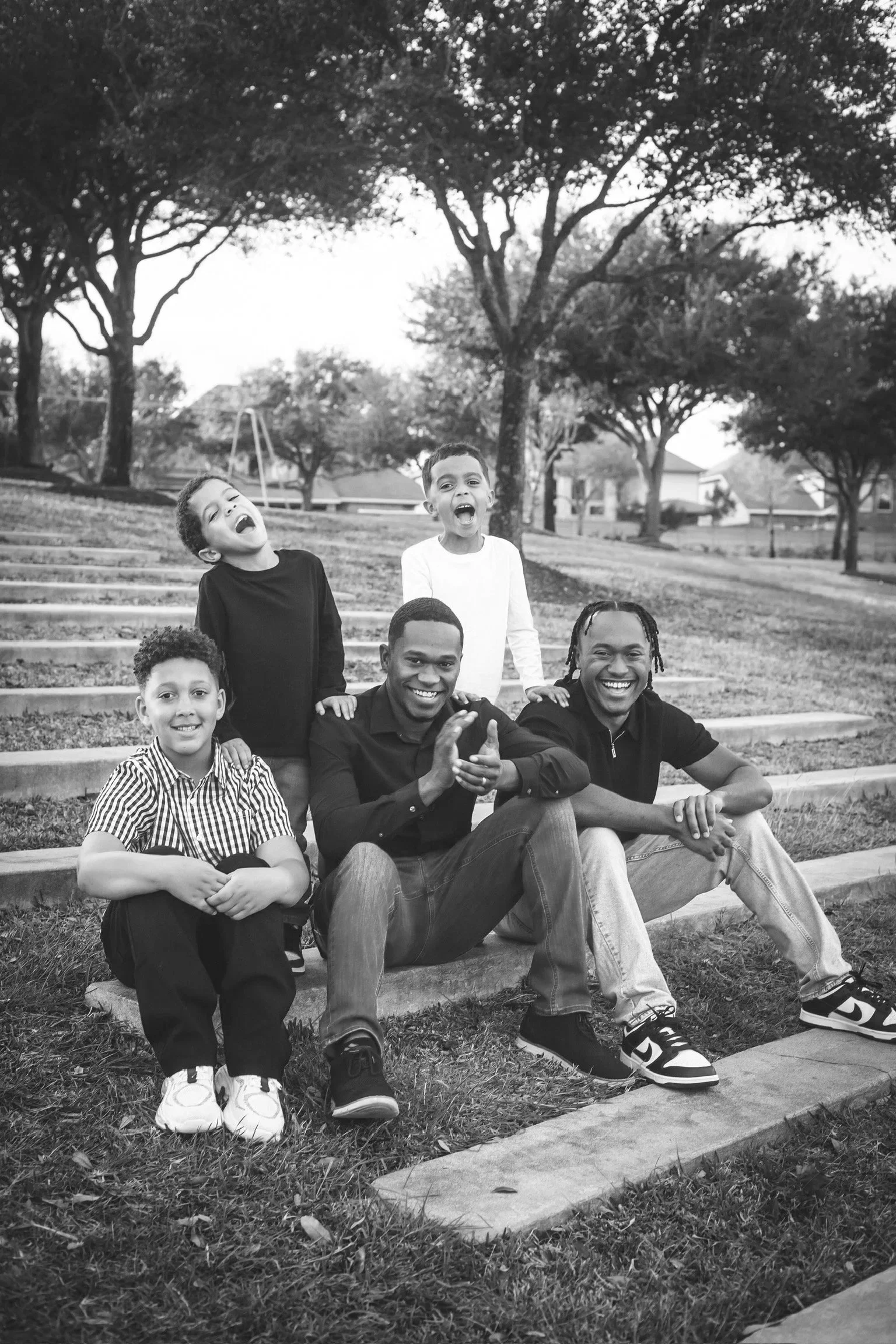
From the Football Field to the Front Lines of Medicine: Trent Odom’s PANDAS/PANS Journey
A young athlete’s hidden battle with PANDAS/PANS, the family who never gave up, and his mission to help others find answers sooner.
For many children, a PANDAS/PANS diagnosis becomes one chapter of their story.
For Trent Odom, it became the foundation for his future.
When Trent Odom sat down on Zoom with Jennifer Vitelli, Executive Director, and Cathy Witkos, President of the Look. Foundation, he showed up with a big smile and an openness that immediately stood out. He was thoughtful, kind, and already focused on the future. Today, he is a biochemistry pre-med student who dreams of becoming a physician. But the path that led him there began with a medical battle few people could see.
The Double Life
By day, Trent was a starting quarterback and honors student.
At home, he was sleeping on the living room floor because his brain would not let him get into bed.
Trent grew up in Katy, Texas, surrounded by football, faith, family, and community. His family’s world was deeply rooted in education and athletics. His father is a teacher and high school football coach; his brother went on to coach college football; and his mother spent more than 29 years in education, including 20 years as an elementary school assistant principal.
Trent describes himself as an outgoing, optimistic, and highly active kid—the kind of child who was always playing something. Whether it was football, basketball, track, tennis, soccer, baseball, or summer camp, he was constantly moving, competing, connecting, and showing up.
In the fall of 2018, when Trent was in seventh grade, something began to shift. What started as mild obsessive-compulsive tendencies escalated into symptoms that affected nearly every part of his life, including OCD, anxiety, tics, seizures, dysgraphia, and academic regression. Ordinary activities became increasingly difficult, and the ground became a major OCD trigger.
Trent began wiping himself down with Clorox wipes every night. He did it so often that his skin and even his eyes became visibly discolored.
“My brain was telling me I had to be clean before getting in my bed,” he shared.
At school, Trent was still an athlete. He was still involved and trying to keep up. He continued playing as the starting quarterback on the top football team, but internally, he was fighting symptoms that were becoming harder to manage.
At home, something as ordinary as getting into bed felt impossible because his brain told him everything had to be “perfect.” At one point, he slept on a comforter on the living room floor because he could not meet the level of perfection his brain required before getting into his own bed.
By eighth grade, morning routines and locker room rituals had become so overwhelming that Trent was chronically late to practice. Despite his talent and work ethic, he was moved from starting quarterback to backup because his illness made it difficult to arrive on time.
Peers called him a germaphobe, and some intentionally touched him to provoke a reaction. Teachers and administrators did not always understand what they were seeing. There were moments when Trent’s medical condition was mistaken for defiance.
To the outside world, Trent was still functioning, going to school, playing sports, and showing up. Behind closed doors, he was unraveling. He describes that time as living a “double life.”
His experience reflects what so many PANDAS/PANS families know too well: A child can appear successful, social, athletic, or academically strong while privately fighting a deeply misunderstood medical battle.
That is one of the messages Trent wants schools to hear clearly:
“Don’t mistake illness for rebellion.”
The Road to Diagnosis
Like so many PANDAS/PANS families, Trent’s family knew something was wrong, but answers were not easy to find.
Then, unexpectedly, a clue came during March Madness the following year. Trent’s grandmother saw a television segment about a coach’s son with PANDAS. Something about the story felt familiar, and she immediately called Trent’s mother. That moment pointed the family toward a possible explanation, but getting answers and appropriate care still took time.
The wait to see a pediatric neurologist was about three months. In the meantime, Trent tried OCD therapy, but he was not responding as his family had hoped. He also attended an intensive out-of-state OCD program, an experience he remembers as extremely difficult and something he essentially pushed through before returning home. The out-of-state program seemed, from the outside, to help with symptoms. He was touching door handles, hugging friends; a teacher even said, “We got the old Trent back.” Trent discussed with us that he was trying to fake it until he made it because he was scared to have to do the OCD treatment again. Unfortunately, this appearance of progress was erased when Trent contracted strep throat at the beginning of 8th grade.
Eventually, the family connected with specialists who recognized the possibility of PANDAS/PANS and began treating an underlying medical picture that included strep, Lyme, mycoplasma pneumonia, viruses, and mold toxicity. It was the beginning of a very long road.
The Years No One Saw
When leaving for winter break in 8th grade, he had no idea that it would be years until he would attend in-person school again. Trent’s health continued to deteriorate. There was a period when he could not feed himself, use the restroom, shower, dress, or drink independently. His father helped him with basic daily tasks, and Trent remained isolated at home for months. Then COVID-19 arrived. For a child already battling severe contamination fears, the pandemic made everything worse. The world was suddenly reinforcing the very fears his brain had been screaming at him. During this time, Trent’s family moved to his grandparents’ house for an extended period as part of the effort to help him heal.
His journey was not a straight line. There were improvements, setbacks, relapses, and long periods of uncertainty. But there was also a family that refused to stop searching for answers.
Family, Treatment, and Recovery
Throughout his journey, Trent’s family was his anchor and greatest source of strength.
His grandmother’s observation helped make the initial PANDAS connection. His mother researched treatments, tracked information, and advocated with schools and doctors. His parents coordinated appointments and created a safe place at home.
They understood the difference between the Trent the world saw and the Trent who was struggling internally. They met him with patience, love, and belief, even when the path forward was unclear.
Trent’s recovery unfolded over several years and involved an individualized combination of medical treatment, intensive Exposure and Response Prevention therapy, lifestyle support, and complementary approaches. His journey included antibiotics, antivirals, antifungals, antiparasitics, IVIG, a tonsillectomy, neurofeedback, IV ozone, homeopathy, supplements, vitamins, mold detox, sunlight, sauna, hydration, exercise, chiropractic care, acupuncture, and reiki. There was no single quick fix, and his progress was not linear. He and his family drove long distances multiple times a week for care.
After initially resisting ERP because of a difficult prior treatment experience, Trent eventually committed to it deeply. At one point, he was seeing one therapist four days a week and another once a week.
Alongside his family’s support, Trent credits faith and perseverance with helping him move forward, especially during the years when recovery felt uncertain.
Slowly, progress came.
He began regaining his independence, first through small victories and then through larger ones. He showered on his own and gradually managed more activities of daily living. His therapy sessions decreased from five days a week to four, then three, then once a week, and eventually once a month. With each step, he rebuilt his confidence.
By 2023, Trent entered remission.
Returning to School and to Himself
After three and a half years away from formal school, Trent returned to high school as a reclassified junior.Before coming back, Trent had to make up 10 credits in one year online while being homebound so he could be on track to graduate. He had last attended school in person in eighth grade. Now, at 17, he was working to catch up academically, socially, and emotionally while preparing for college.
He also returned to football and received a UIL eligibility exception from the state of Texas that allowed him to play during his junior and senior years. He played varsity football with his father as his coach.
Trent graduated in the top 20% of his class with a 3.9 GPA. He received the Fighting Panther Award, which recognized his character on the football team, and the Mr. Paetow Panther Award, as one of only two students chosen from a graduating class of 951.
For families currently in the depths of PANDAS/PANS, Trent’s story offers something incredibly important: hope.
PANDAS/PANS took years from him.
But it did not take his future.
What Schools Need to Understand
One of Trent’s most important messages for schools is this:
“Performance doesn’t always mean well-being.”
A student may be earning good grades, playing sports, participating in activities, or appearing “fine” during the school day while completely falling apart at home.
For students with PANDAS/PANS, symptoms can be invisible to teachers, coaches, counselors, administrators, and peers. What appears to be avoidance, defiance, tardiness, rigidity, or disrespect may actually be driven by a medical condition.
Trent encourages schools to look deeper and respond with curiosity rather than punishment.
“Don’t mistake illness for rebellion.”
Schools can better support students with PANDAS/PANS by recognizing that symptoms may look very different at school than they do at home. Students may need flexible accommodations, open communication, and a team that understands possible signs such as sudden-onset OCD, anxiety, tics, eating restrictions, school refusal, and emotional changes.
Most importantly, Trent believes students need to be seen individually. Children and young adults with PANDAS/PANS should not be placed under one broad umbrella. Their symptoms, triggers, needs, and abilities may vary, and may even look different from one day to the next.
What Doctors Need to Understand
Trent also has a message for clinicians: Stay open-minded.
His journey taught him how deeply connected the immune system, the brain, and the rest of the body can be. He hopes more doctors will be willing to consider “the interconnection between the immune system, the brain, and other organ systems.”
For Trent, this is not simply personal. It is becoming his life’s work.
Where Trent Is Today
Today, Trent is a sophomore biochemistry pre-med student at LSU. He has made the Dean’s List twice and received the Distinguished Student Award as the only freshman in his Science Residential College to earn the recognition.
He serves as secretary of Black Men in Medicine and is involved in Alpha Epsilon Delta pre-med honor society, the Brain Exercise Initiative, Synapse neuroscience club, church groups, and the LSU football equipment staff.
Trent was also selected as a Rays of Light Ambassador by the PANDAS Network and participated in the documentary Rooted in Resilience, filmed over three years from 2020 to 2023. He has been involved in PANS Courage, a support group for PANDAS/PANS patients, and is a member of the National PANDAS/PANS Youth Alliance, an advocacy group for young adults diagnosed with PANDAS/PANS. Trent also had the opportunity to share his story at the Texas Capitol on National PANDAS Awareness Day, October 9, 2025, and was given an Awareness Day declaration signed by Governor Greg Abbott.
On campus, he is using his voice to raise awareness. He has educated classmates and friends, brought the topic into class projects, and continued looking for opportunities to help others understand the condition.
Every conversation, presentation, class project, and opportunity to educate others brings Trent closer to the future he envisions:
A future where children are diagnosed sooner.
A future where schools recognize the signs.
A future where children receive the treatment and support they need.
In a powerful full-circle moment, Trent is now shadowing his own pediatric neurologist, Dr. David Doan, in Katy, Texas, as well as his childhood pediatrician.
After years of being the patient, Trent is preparing for a future on the front lines of medicine.
His goal is not simply to become a physician. He wants to become the kind of physician who helps children and families find answers sooner than he did. He plans to attend medical school and become a pediatric neurologist specializing in PANDAS/PANS.
Trent wants to “make his pain his purpose” by helping other children and families find answers sooner, feel less alone, and move forward with greater hope.
Trent’s Message to Families
For families still in the thick of it, Trent offers both honesty and hope:
“Take it day by day, be patient with yourself, and recognize that your best will look different each day.”
That message matters because PANDAS/PANS recovery is rarely linear. Some days may bring progress; others may bring setbacks. But Trent’s story is proof that healing is possible, even after years of struggle.
His journey is one of perseverance, faith, family, community, and recovery. It is also a reminder of why awareness matters. When families, schools, and clinicians know what to look for, children and young adults have a better chance of being seen, believed, treated, and supported.
Trent’s story reminds us why we must keep looking beyond behavior, beyond symptoms, and beyond what a child appears to be carrying on the outside.
And that sometimes, the child who once needed answers becomes the young adult determined to help others find them.
