‘The treatment saved me’: Families stunned by MGB decision to end program for controversial pediatric condition
By Allyson Chiu Globe Staff, Updated October 25, 2026, 2:56 p.m.
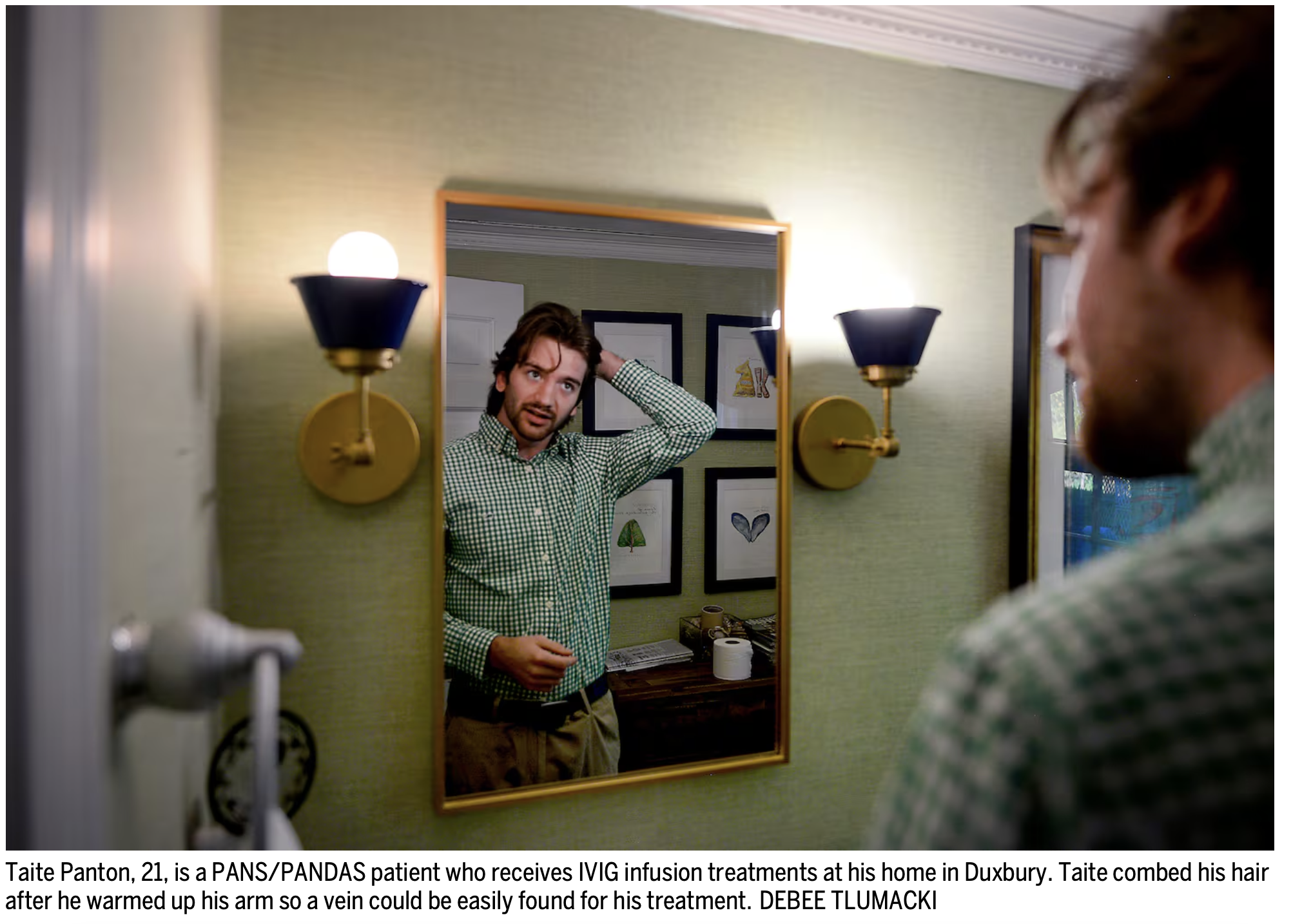
Taite Panton couldn’t stop thinking about the other children. He had never met them, but he knew their story. More than a decade ago, Panton, then 5 years old, transformed seemingly overnight from an active and outgoing boy into a child who couldn’t be away from his parents without experiencing crippling anxiety. He had extreme meltdowns. At times, he asked aloud why he was alive.
Panton and his family didn’t know it then, but he was showing textbook symptoms of a condition called PANDAS, pediatric autoimmune neuropsychiatric disorder associated with streptococcus. Children with the condition develop sudden, debilitating psychiatric symptoms, often after common infections like strep throat. The intense anxiety, tics, and even suicidality can be so severe that children cannot go to school.
Panton is one of hundreds of patients who received what they describe as life-changing care through a specialized program at Mass General Brigham for Children. The program is one of only a few of its kind nationwide serving children with PANDAS and the related condition PANS, pediatric acute-onset neuropsychiatric syndrome. But in August, the hospital system informed families that it plans to shutter the program, which aimed to address the condition’s medical and psychiatric concerns, in January.
In a statement, MGB said the move to end its PANS/PANDAS services as they had been offered came after a “careful review” of its clinical model.
“We do not have the multidisciplinary services needed to safely sustain a full PANS/PANDAS program that meets national clinical standards of care,” the statement reads.
Now a Massachusetts-based PANS/PANDAS advocacy group has sent a letter to the state attorney general’s office saying the hospital has not provided clear answers about why it’s closing the program and requesting an independent review of the closure plan. The group also raised concerns about whether the hospital’s actions constitute patient abandonment.
“The facts do not support what’s been claimed in the letter,” MGB said.
The decision comes as the condition continues to be a subject of debate within the medical community, in part because doctors don’t fully understand what causes it.
The American Academy of Pediatrics called PANS “likely a valid diagnosis” in a recent clinical report, but said more research on the condition is needed and raised concerns about widely used treatments. The AAP considers PANDAS a subset of PANS.
In Massachusetts, the law requires insurance to cover care for PANS and PANDAS, including the treatments the AAP cautioned about.
The hospital said it would work with patients and their families to find alternative options, but the decision has sparked widespread anger and fear among parents who say they don’t understand why the program is ending and worry that their children will be left without adequate care.
“The treatment saved me,” said Panton, now 21 and a student at the University of New Hampshire. “If I didn’t have that, I’d be on the streets or I’d be in a psychiatric intake unit.”
A complex condition
The first evidence of what would become known as PANS/PANDAS came in a landmark 1998 paper that described 50 children who developed sudden, severe obsessive-compulsive disorder and tics after being infected with the bacteria that causes strep
throat. Since then, doctors and researchers have found that the condition may also be triggered or exacerbated by other infections, including flu and COVID-19, immune system disruptions, and some environmental exposures. Despite improving after initial therapy, symptoms can flare up again and require more treatment.
“Based on what we have seen, it seems anything that can potentially trigger [an] immune response might be causing a PANS/PANDAS flare,” said Dr. Yujuan (Julia) Zhang, a pediatric rheumatologist at Tufts Medical Center. “It’s very hard to predict.”
Experts are still working to fully understand what causes the condition. Some research shows these patients have an abnormal immune response that leads to inflammation in the body and brain, said Dr. Jennifer Frankovich, director of Stanford’s Immune Behavioral Health Clinic & Research Program. Researchers have also found that antibodies generated in response to strep can mistakenly react with parts of the brain involved in movement, behavior, and emotion, Frankovich said.
The syndrome is characterized by the unusually abrupt and dramatic onset of obsessive- compulsive symptoms or severely restricted eating along with other sudden changes in behavior or functioning, Frankovich said.
Jennifer Vitelli of Marshfield remembers the morning her son woke up a completely different child. The boy, 9 years old at the time, spoke in an unsettling baby voice and could no longer brush his teeth or tie his shoes. He had recently finished all the Harry Potter books, but now wasn’t able to read or add two numbers together. “My husband and I were absolutely terrified,” Vitelli said. Doctors told the parents their son was at the age where children are known to develop neurological or psychiatric conditions such as Tourette’s syndrome and bipolar disorder. But Vitelli said her gut was telling her something else was happening. “He became literally a shell of the child that he was,” she said. Her son was eventually diagnosed with PANDAS and received care at MGB.
It’s unclear exactly how many children and young adults have PANS or PANDAS. Frankovich said a conservative estimate based on a 2023 peer-reviewed study of medical records suggests that at least 3,400 new cases occur in the United States each year and roughly 170,000 Americans are living with the condition. It’s likely underdiagnosed, Zhang said. In the last two years, she said she has seen more than 580 patients.
There are no FDA-approved diagnostic tests. Physicians make a diagnosis based on a person’s history and symptoms, many of which are common among pediatric patients and are often more likely to be related to a psychiatric disorder, Frankovich said. “The defining feature is the speed,” she said. “A child may develop several severe symptoms over hours or a few days. That pattern differs from the more gradual onset typical of many psychiatric and developmental conditions.”
Treatment consists of first dealing with the trigger, if it’s still present. Patients might receive antibiotics or anti-inflammatory treatments, such as ibuprofen. People with more severe cases may require infusions of healthy antibodies, a treatment known as intravenous immunoglobulin, or IVIG. While patients are being treated for the inflammatory problem, Frankovich said doctors might also simultaneously treat behavioral symptoms, with cognitive behavioral therapy or other kinds of therapy and medication, including antidepressants.
But parents and PANS/PANDAS providers say many health care professionals are either not familiar with or, in some cases, skeptical of the diagnosis and treatment. Sick children, for instance, are often initially referred to psychiatric services.
“It’s just challenging for the medical community to think patients with a medical condition actually can present with psychiatric symptoms,” Zhang said.
Access to care
Meanwhile, finding care remains challenging. There are fewer than 10 multidisciplinary clinics nationwide that treat the disorder, according to the PANDAS Physicians Network, part of the Foundation for Brain Science and Immunology, a nonprofit. In New England, aside from a few providers at MGB and Tufts Medical Center, Dartmouth also offers care. There are also independent providers in the region, including pediatricians, psychiatrists, and nurse practitioners. Families of children who are eventually diagnosed share a similarly lengthy, emotionally taxing, and costly experience in their search for treatment.
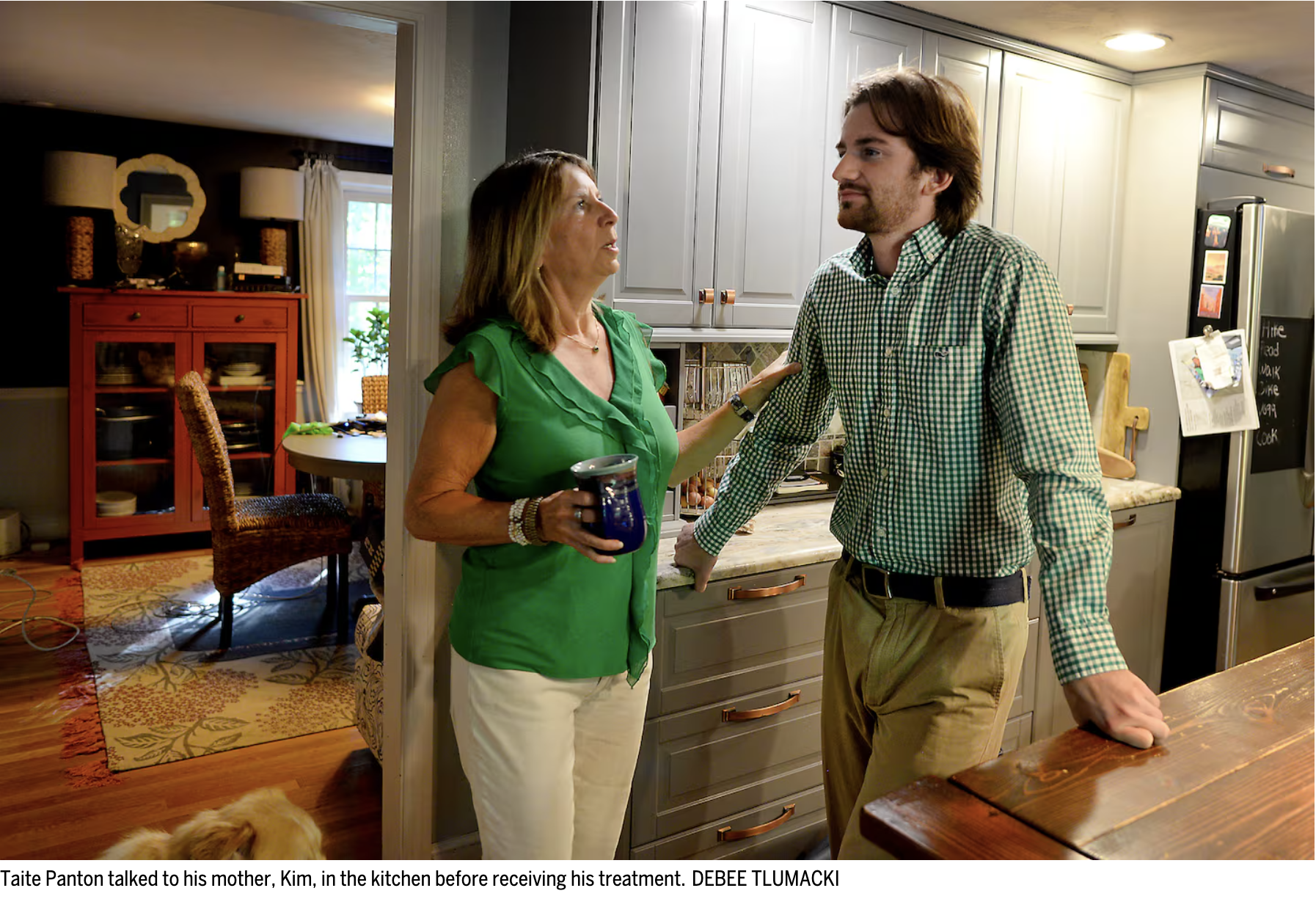
Kim Panton, Taite’s mother, learned about the condition from a psychiatric nurse practitioner he had just started seeing because he was diagnosed with bipolar disorder, ADHD, and depression. Taite had been on a cocktail of psychiatric medications for about a year and wasn’t getting better. Then, he woke up with uncontrollable, full-body tics. Frantic and crying, Panton called the nurse practitioner. She immediately told Panton she knew what was wrong and asked the mother to come see her the next day. “This is like a sci-fi movie,” Panton, 58, recalled thinking as the nurse practitioner explained PANS/PANDAS.
Panton left the visit with a prescription for antibiotics. Within a day, Taite’s tics stopped. The nurse practitioner recommended he try IVIG. Unable to get an appointment at MGB, which had a lengthy waitlist, the Duxburyr esidents flew to Washington, D.C., to see a doctor there. The physician was out-of-network and the treatment would cost $15,000. Panton handed over her credit card without hesitation. “Weeks after that, we had our son back,” she said. Eventually, the family was able to see Dr. Mark Pasternack, a pediatric infectious disease doctor who treats children with the condition at MGB. There, the Pantons had full insurance coverage, and Taite could get infusions without traveling. “It changed everything for us,” Kim Panton said. In high school, Taite ran cross country and was a competitive mountain biker, often winning titles in races across New England. Last August, when he experienced a symptom flare, he was able to get IVIG treatment at home. “I don’t want to go back to the way I was,” he said. “It’s like you’re possessed. You’re taken over by something.”
A ‘devastating blow’
MGB’s PANS/PANDAS program launched in 2013, and for many years mostly involved Pasternack and Dr. Kyle Williams, a psychiatrist. By 2024, the program had logged more than 3,000 patient visits and completed more than 1,500 new evaluations, according to a fund-raising email sent in September that year, which was provided to the Globe by the Look. Foundation, the local advocacy group. In January, families of patients were told that Pasternack was going on medical leave. For care during his absence, some parents said they were directed to Williams and Zhang, the Tufts doctor.
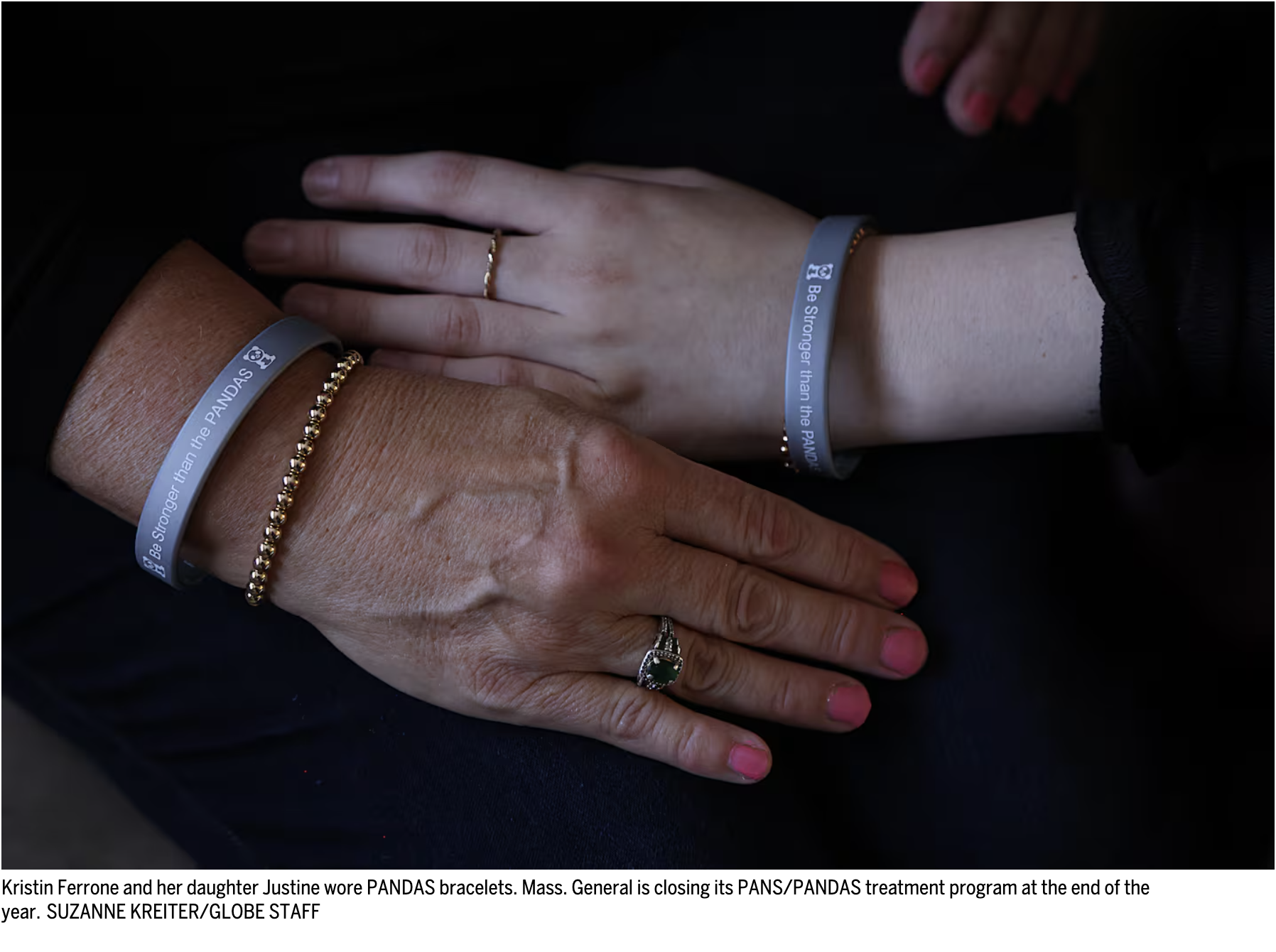
MGB's closure of PANDAS/PANS care program draws backlash. Then, in August, MGB notified patients through a message in their patient portals that the program was closing. Patients could continue to access care through the hospital’s child and adolescent psychiatry service, a message said. If parents had questions about antibiotics or immunotherapies, they were informed that the psychiatry team would coordinate referrals to other specialists at the hospital. The letter also encouraged parents to contact. their children’s primary care providers. The notice left Kristin Ferrone of Wilmington stunned. “I don’t know where any of these patients will go,” said Ferrone, whose 15-year-old daughter has been receiving care at MGB since she was 5. “People need help,” she added, calling the decision to close the program “morally very wrong.”
In response to questions from the Globe about the closure, MGB said it will continue to provide care through the hospital’s child and adolescent psychiatry department, pediatric infectious disease specialists, and primary care providers. “We recognize that children diagnosed with PANS/PANDAS can experience severe and disabling symptoms, with a profound impact on them and their families,” MGB said. The decision to close the program “does not mean that we are dismissing these children’s symptoms or their need for care.”
Pasternack has returned from leave and is seeing PANS/PANDAS patients to assist them with a transition plan, MGB said. In response to the Globe’s request to interview Pasternack, MGB referred to its statement and a spokesperson offered to address additional questions.
The hospital noted that its decision to end the program “is not tied to the availability or return of any one physician.”

Vitelli, who had three children diagnosed with the condition and received care at MGB, said parents have struggled to understand why the hospital would end its program. Vitelli, now executive director of the Look. Foundation, and other advocates successfully pushed for legislation that led to mandated insurance coverage in Massachusetts for PANS/PANDAS care, including IVIG treatment. Over the years, Vitelli said she and other parents have met with MGB leadership on issues related to sustaining the program, including adding more dedicated staffing. The closure “is devastating because it eliminates one of the few medical pathways available to these children,” Vitelli said.
Earlier this month, the Department of Public Health’s PANDAS/PANS Advisory Council sent a five-page letter to Dr. Robbie Goldstein, the state’s health commissioner, imploring him to take action on the issue. The council, which includes parents, advocates, and health care providers, asked for state health officials to review MGB’s closure and transition plan, including whether established patients had a “viable pathway for continuing care, and whether the circumstances raise patient safety, continuity-of-care, or potential patient abandonment concerns.” The council also urged health officials to push the hospital to maintain its treatment program through at least January 2028.
Meanwhile, parents continue to scramble for alternative care options. “We’re on as many waiting lists as I know about,” said Amy Donovan, 53, whose teenage daughter is still recovering. The Milton resident said she and her husband discussed the possibility of a program in Indiana. “We’ll drive anywhere,” she said.
Allyson Chiu can be reached at allyson.chiu@globe.com. Follow her on X @_allysonchiu.